Hildegarde Schmidt
Hildegarde Schmidt, the German lady's-maid to Princess Dragomiroff, appears at first as a minor, placid figure on the Orient Express, but her evidence and her hidden past become essential to unraveling the murder of Samuel Edward Ratchett. Her description of a small, dark man with a womanish voice, seen in Wagon Lit uniform, provides the first concrete link to an intruder, while her own history as the cook in the Armstrong household places her among the twelve conspirators who have gathered to execute a private sentence of death.
Identity and Background
Schmidt is a German woman of placid, respectable demeanor, described as having a broad, kindly face and an expression of "placid stupidity" . She has been in the service of Princess Dragomiroff for fifteen years, having come from an estate of the Princess's late husband in Germany (E01404–E01406). The Princess trusts her implicitly, stating, "I do not employ people whom I do not trust" . Schmidt's own account of her background is modest: she is a lady's-maid, and when Poirot asks if she is a good cook, she replies, "Yes, indeed, all my ladies have said so" (E02312–E02313). This seemingly innocent remark becomes a trap: a lady's-maid's employers seldom have occasion to judge her cooking, and Poirot later realizes that this slip reveals her true role in the Armstrong household—she was the cook (E03012–E03013).
Role in the Investigation
Schmidt's testimony is taken in German, with Poirot adopting a kind and genial manner to put her at ease (E01904–E01906). She recounts that she was awakened by the conductor at approximately 12:38 A.M. and went to attend to Princess Dragomiroff, who required massage and reading aloud (E01911–E01921). On her way back from fetching an extra rug, she nearly collided with a man coming out of a compartment—a man she describes as "small and dark" with a "little moustache" and a voice "weak, like a woman's" . This description matches exactly the enemy Ratchett had described to Hardman: "A small man—dark—with a womanish kind of voice" . Schmidt's identification is crucial because it confirms that such a person actually existed on the train, and it is later corroborated by the button found in Mrs. Hubbard's compartment and by the testimony of Colonel Arbuthnot and Hector MacQueen, who also saw a conductor passing their carriage at a time when the real conductor, Pierre Michel, claimed he was elsewhere (E02013–E02016).
Connection to the Armstrong Case
When Poirot reveals that Ratchett was Cassetti, the man responsible for the Armstrong kidnapping, Schmidt reacts with genuine emotion: "It was abominable—wicked. The good God should not allow such things. We are not so wicked as that in Germany" . Tears come into her eyes, and her "strong, motherly soul" is moved . This emotional response, while sincere, also masks her personal connection to the tragedy. Poirot later deduces that Schmidt was the cook in the Armstrong household . Her presence on the train is not coincidental; she is one of the twelve conspirators who have organized to carry out the execution of Cassetti. Her role in the plot is to provide an alibi for Princess Dragomiroff and to give testimony that would confuse the investigation—her description of the "small dark man" is a deliberate fabrication designed to point suspicion away from the actual passengers .
The Wagon Lit Uniform and the Handkerchief
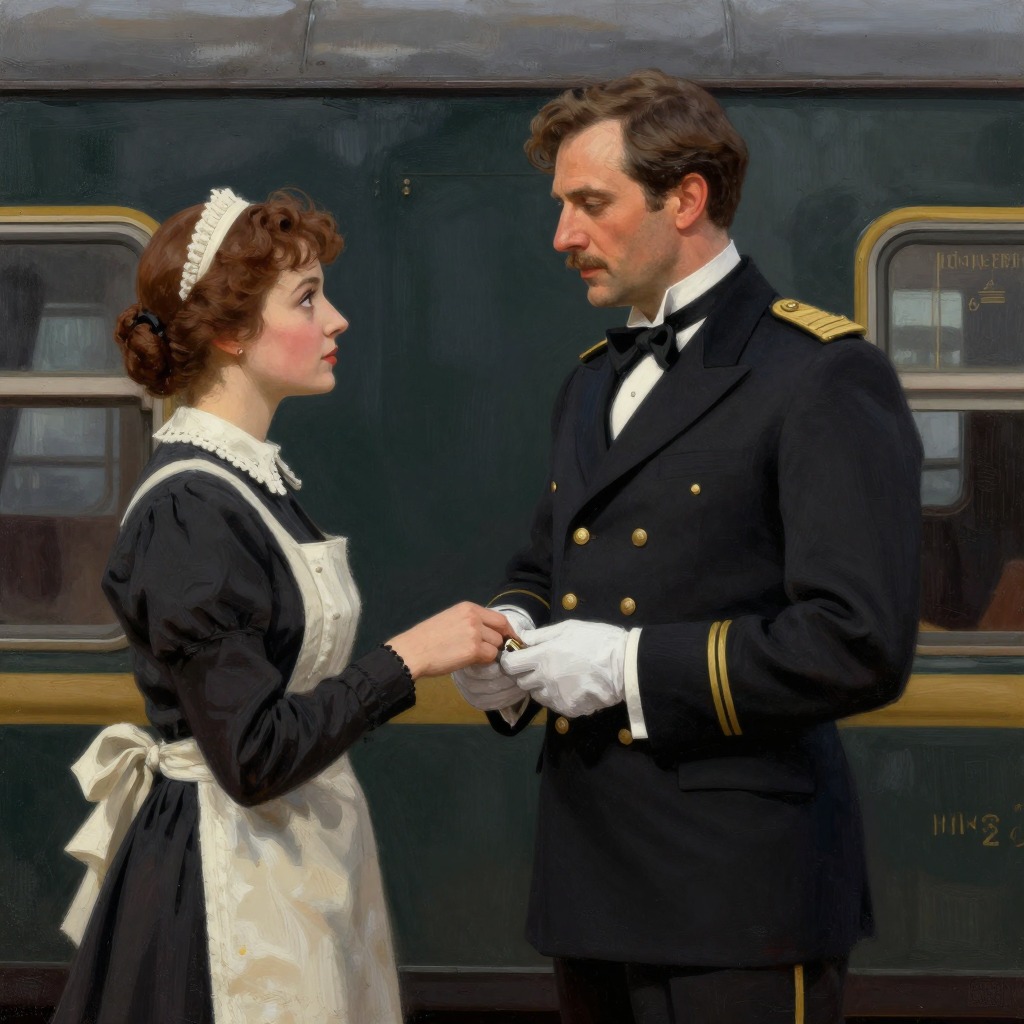
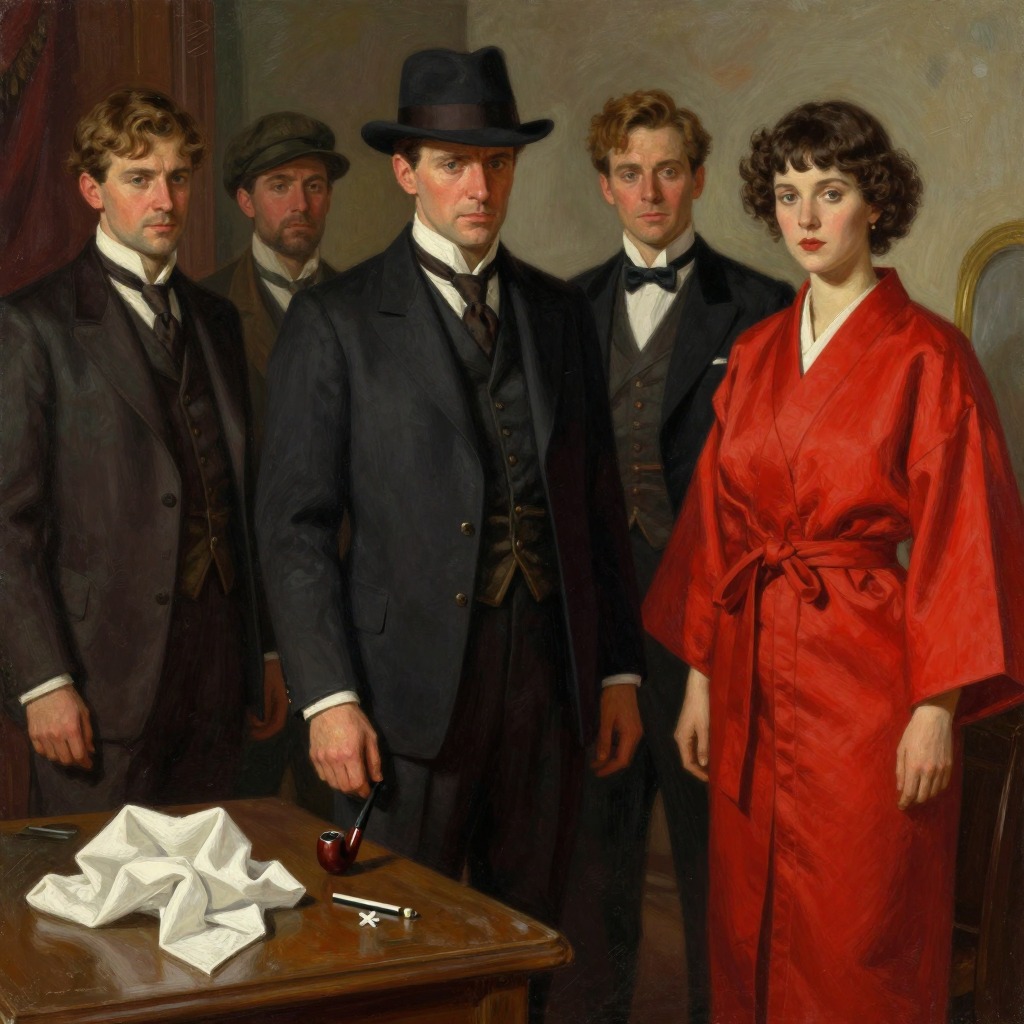
During the search of passengers' luggage, a Wagon Lit uniform is discovered in Schmidt's suitcase (E02307–E02308). She is genuinely shocked and protests that she did not put it there: "Ach! That is not mine. I did not put it there. I have never looked in that case since we left Stamboul" . Poirot believes her and explains that the real murderer, after colliding with her, slipped into her compartment and hastily hid the uniform in her suitcase to avoid detection (E02315–E02317). This explanation is consistent with the conspiracy theory: the uniform was a prop used by one of the conspirators to impersonate a conductor, and its discovery in Schmidt's luggage was an unintended consequence of the plan. Later, when Poirot shows Schmidt the handkerchief with the initial H, she hesitates before denying it is hers (E01961–E01969). Poirot notices the nuance of hesitation and later realizes that she recognized it as belonging to Princess Dragomiroff but was uncertain whether to admit it . Her loyalty to her mistress leads her to shield the Princess, even at the risk of incriminating herself.
Thematic Significance
Schmidt embodies the theme of loyalty and the blurring of class boundaries in the collective revenge plot. As a servant, she is part of a household that was shattered by the Armstrong tragedy, and her participation in the conspiracy is driven by a sense of justice and devotion to the family she served. Her placid exterior conceals a deep emotional wound, and her willingness to lie and to risk her own safety for the sake of the others reflects the solidarity that binds the twelve conspirators. Poirot's trap—asking if she is a good cook—reveals the hidden network of relationships that connects all the passengers to the Armstrong case. Schmidt's role, though seemingly minor, is essential to the mosaic of the crime: she provides the false clue of the "small dark man," she unwittingly becomes the repository for the incriminating uniform, and her loyalty to Princess Dragomiroff nearly derails the investigation. In the end, she is one of the faithful souls whom Linda Arden seeks to protect, and her quiet complicity underscores the novel's exploration of justice, vengeance, and the moral complexities of extra-legal punishment.